

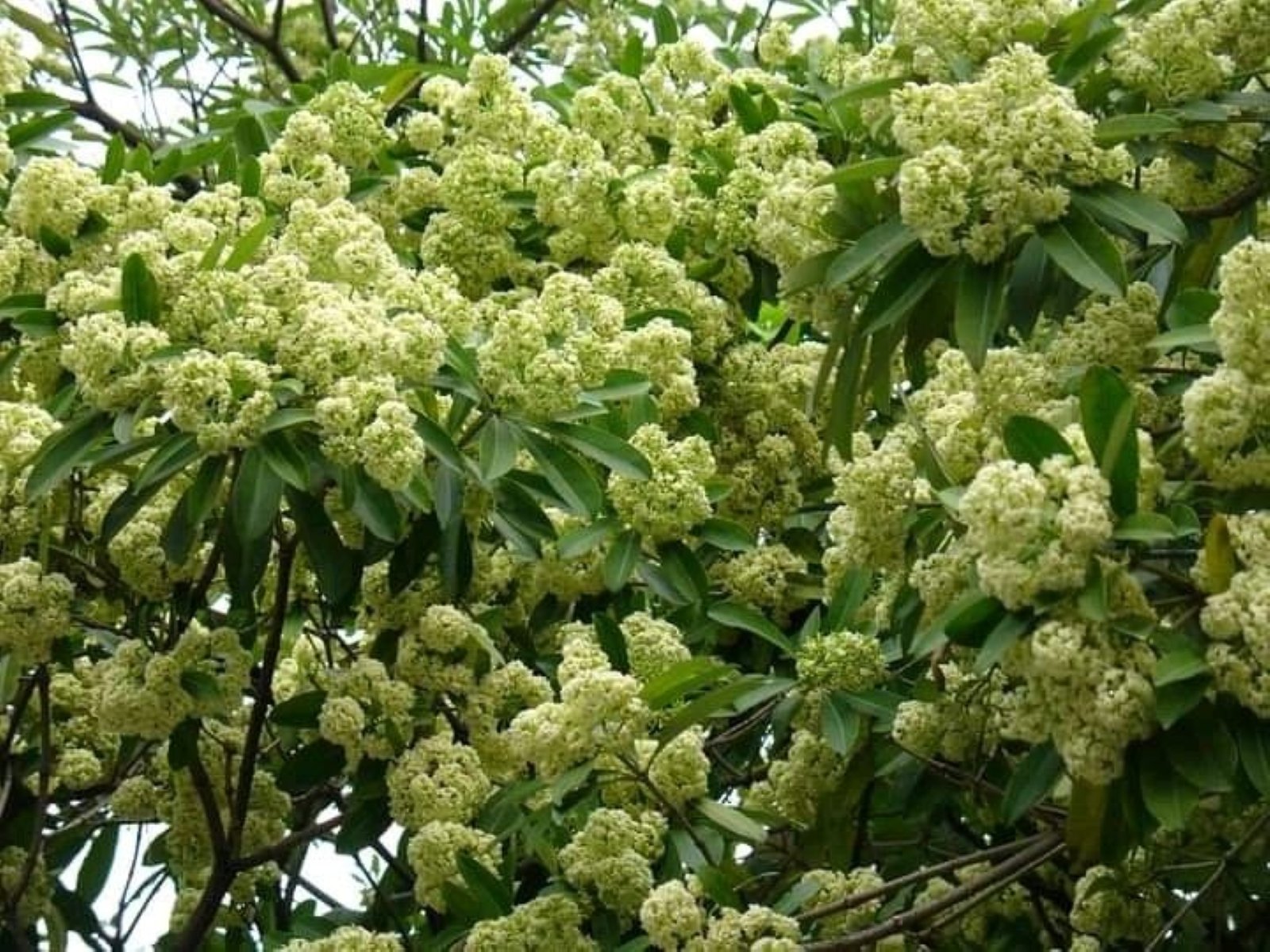
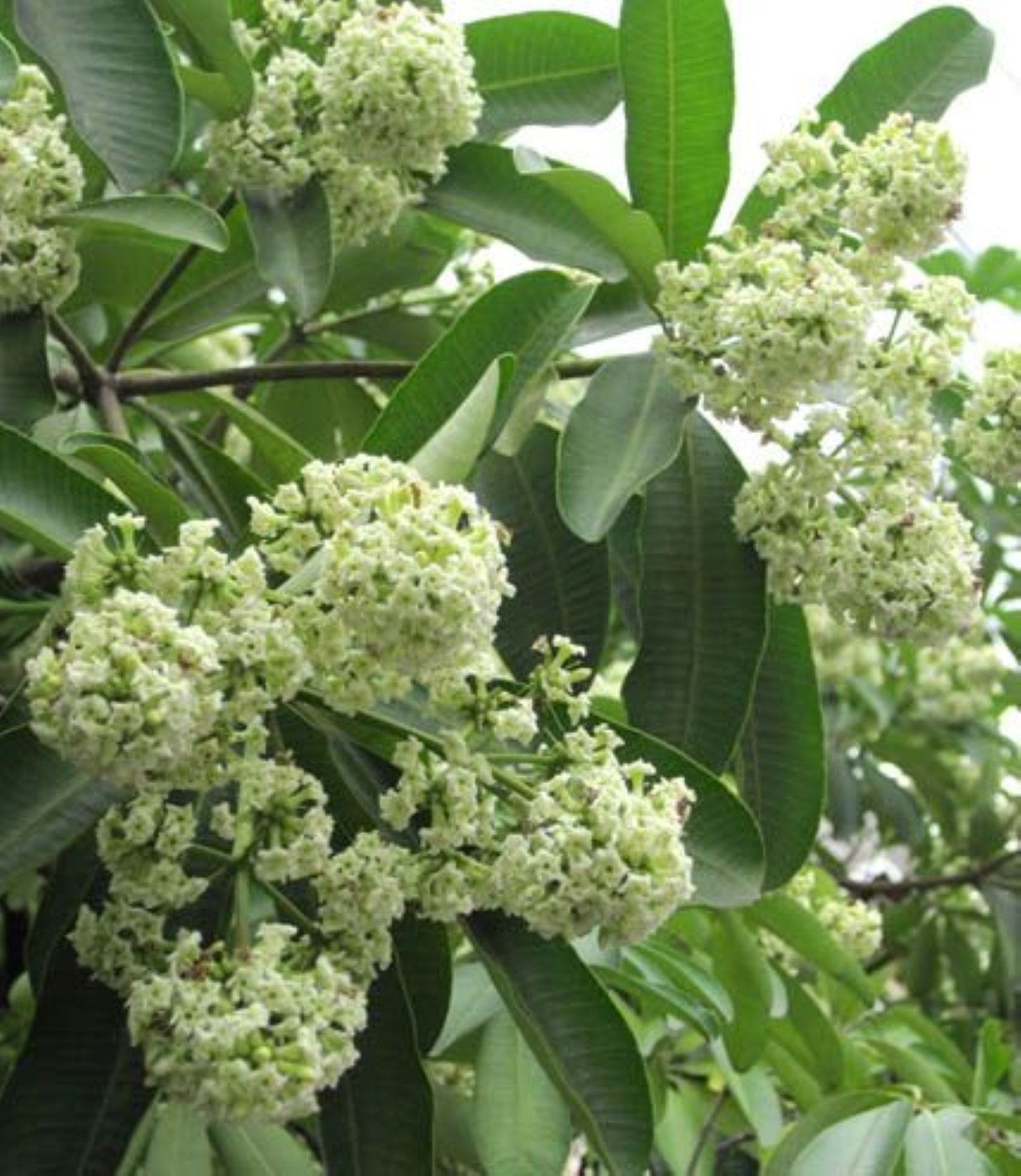
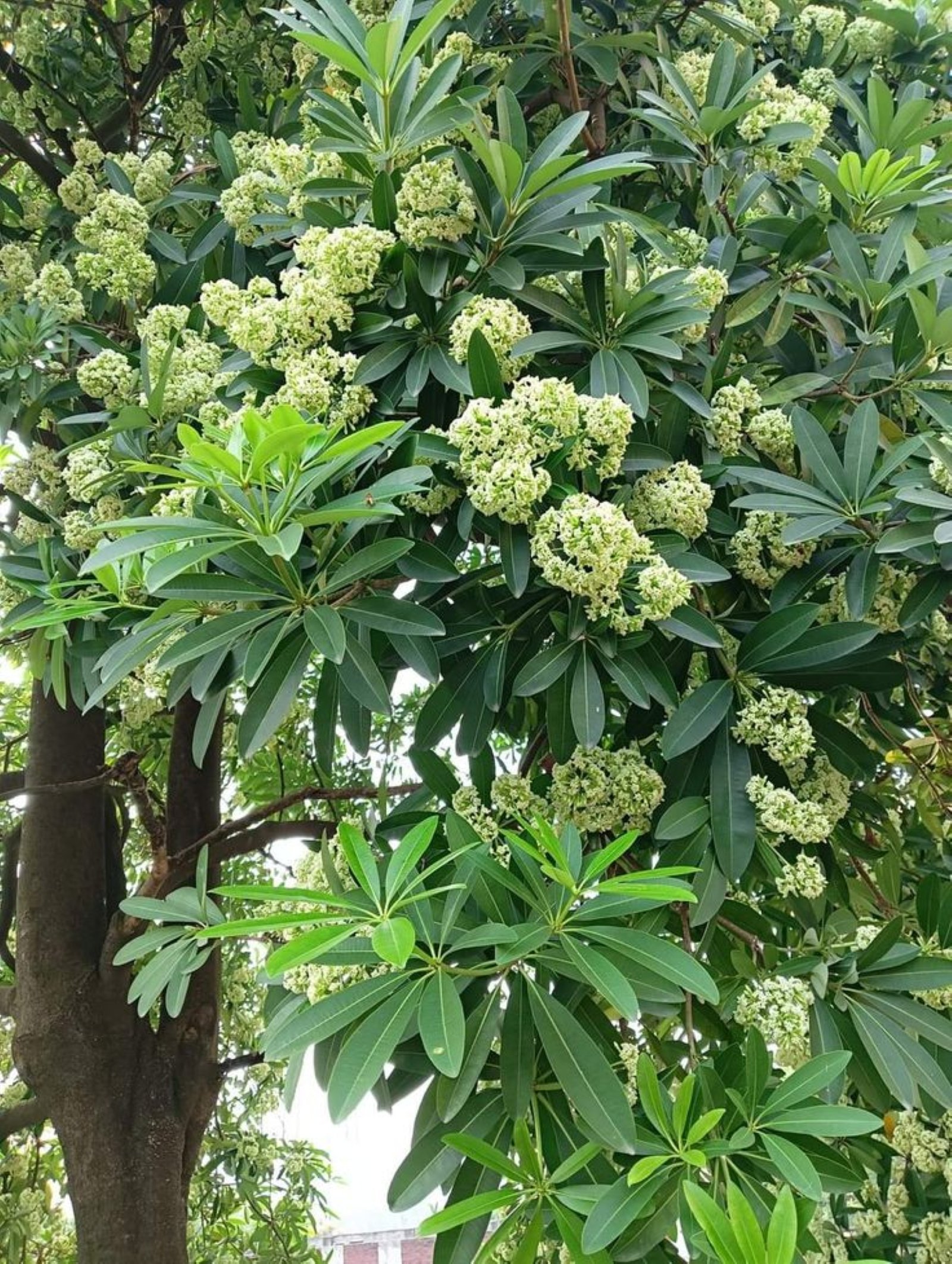

Alstonia scholaris, commonly called blackboard tree or devil’s tree in English, is an evergreen tropical tree in the family Apocynaceae. It is native to southern China, tropical Asia and Australasia, it is a commonly planted ornamental plant in these areas.
Alstonia scholaris is a glabrous tree and grows up to 40 m (130 ft) tall. Its mature bark is grayish and its young branches are copiously marked with lenticels.
The upper side of the leaves are glossy, while the underside is greyish. Leaves occur in whorls of three to ten; petioles are 1–3 cm (0.39–1.18 in); the leathery leaves are narrowly obovate to very narrowly spathulate, base cuneate, apex usually rounded; lateral veins occur in 25 to 50 pairs, at 80–90° to midvein. Cymes are dense and pubescent; peduncle is 4–7 cm (1.6–2.8 in) long. Pedicels are usually as long as or shorter than calyx. The corolla is white and tube-like, 6–10 mm (0.24–0.39 in); lobes are broadly ovate or broadly obovate, 2–4.5 mm (0.079–0.177 in), overlapping to the left. The ovaries are distinct and pubescent. The follicles are distinct and linear.
Flowers bloom in the month October. The flowers are very fragrant similar to the flower of Cestrum nocturnum.
Seeds of A. scholaris are oblong, with ciliated margins, and ends with tufts of hairs 1.5–2 cm

Reviews
There are no reviews yet.